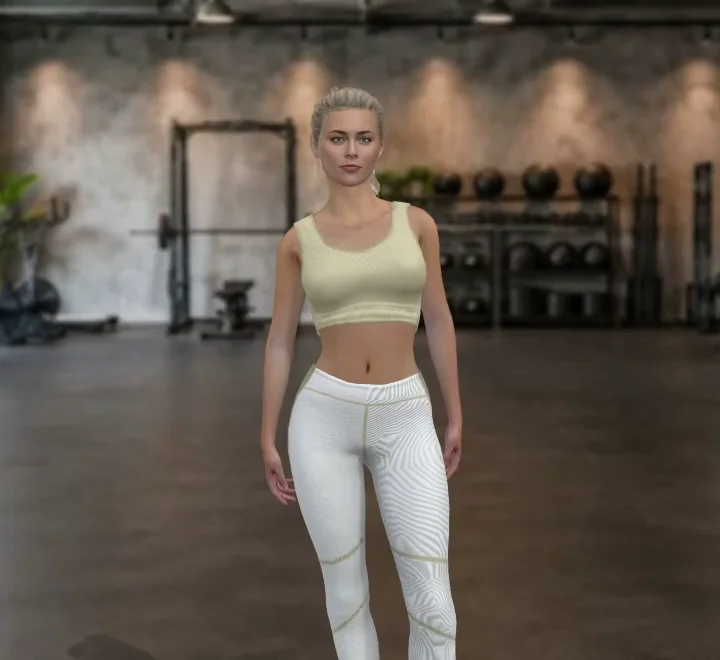
Set up your space.
Use a clear standing space and leave room behind you. This version uses no weights. You do not need to reach the floor or make your torso horizontal.
Step-by-step technique
- Stand with your feet about hip-width apart and soften your knees.
- Place your hands on your hips if it helps you notice where the movement starts.
- Send your hips back while your torso tips forward. Keep your back comfortably long rather than deliberately rounding it.
- Stop before you lose that position, then bring your hips forward to stand upright without leaning backward.
Use a shallow hinge for your first few attempts. Pause upright between repetitions and compare whether your hips are moving back each time. Keep the same small range until the pattern feels familiar.
Common mistakes to watch for
- Trying to reach down with the shoulders while the hips barely move.
- Bending the knees more and more until the movement becomes a squat.
- Forcing a deep fold or leaning backward at the top of the repetition.
Make it easier.
Keep the movement shallow and place your hands on your hips to feel them move back.
You can pause, shorten an interval, or leave this movement out of a routine. Use a version you can control rather than trying to match an animation’s speed.
What is the difference between a hinge and a squat?
Both involve your hips and knees, but the emphasis differs. In this hinge, your hips move back with only a small knee bend. A squat uses more knee bending to lower your body. Practise them separately rather than trying to make the two shapes look identical.
Is this a good morning exercise?
The bodyweight good morning is a standing hinge pattern, which is the movement Franky demonstrates here. A loaded good morning adds resistance and is a different training decision. Learn the unloaded pattern first and get suitable instruction before adding a load.