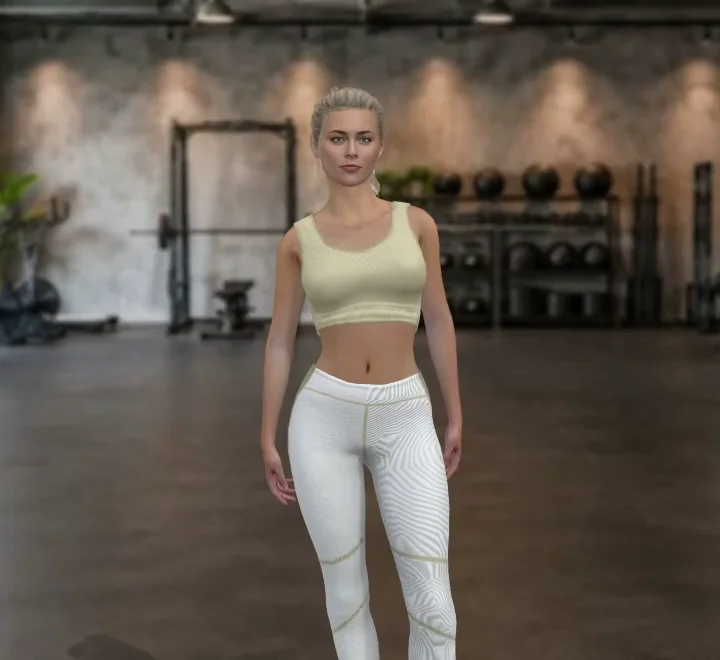
Set up your space.
Find a stable floor with room around your feet. If you plan to use the chair option, choose a sturdy chair without wheels and position it so it cannot slide.
Step-by-step technique
- Stand with your feet about shoulder-width apart. Let your toes point in a comfortable direction.
- Start to sit back as your knees bend. Keep your whole foot in contact with the floor.
- Lower only as far as you can comfortably control, with your knees following the direction of your toes.
- Press through your feet and stand smoothly. Reset your balance before the next repetition.
Begin with a few slow repetitions, then stop and check how the movement felt. In a timed routine, you can take a break before the interval ends. Use the same comfortable depth each time so you can compare your control.
Common mistakes to watch for
- Dropping quickly and relying on a bounce to come back up.
- Going deeper than you can control, so your heels lift or your balance shifts.
- Forcing your feet into a position that feels awkward instead of finding a comfortable stance.
Make it easier.
Use a shallower bend, or sit down and stand up from a sturdy chair that cannot slide.
You can pause, shorten an interval, or leave this movement out of a routine. Use a version you can control rather than trying to match an animation’s speed.
Can I use a chair to learn the squat?
Yes. A stable chair gives you a clear place to sit and stand from. Set it at a suitable height and make sure it cannot move. Sit down deliberately rather than dropping onto it, then stand when you are ready.
This is an alternative to the standing squat shown in the animation. Keep the written instructions for the version you are using in mind. A shallower standing bend is another option if that feels more comfortable.
How deep should I squat?
Use the range you can manage comfortably with balance and control. You do not need to force a deep position to begin. If the movement hurts, stop rather than treating greater depth as the goal.