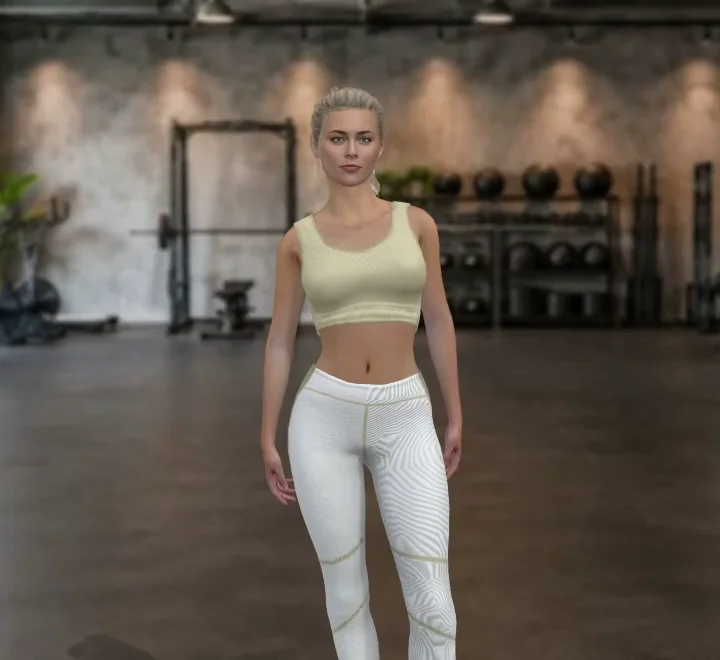
Set up your space.
Make sure your hands cannot hit a wall, furniture, or another person. Stand on a steady floor. You can keep the movement below shoulder height; there is no need to reach overhead.
Step-by-step technique
- Stand tall with your feet comfortably apart and knees softly bent.
- Let your arms hang naturally and release any shrug in your shoulders.
- Swing your arms gently forward and back without trying to throw them farther.
- Keep the range comfortable and your torso quiet. Let the movement slow before stopping.
Start with a few small swings, check that you have enough space, then continue only while the motion feels comfortable. Keep the movement easy enough that you can stop deliberately at any point.
Common mistakes to watch for
- Using a strong swing to force extra shoulder range.
- Shrugging toward the ears or arching the lower back to reach farther.
- Standing too close to furniture because the first few swings were small.
Make it easier.
Make the swings smaller and keep your arms below shoulder height.
You can pause, shorten an interval, or leave this movement out of a routine. Use a version you can control rather than trying to match an animation’s speed.
Will arm swings build upper-body strength?
This gentle version is intended for easy movement, not as a challenging resistance exercise. Do not count relaxed arm swings as a substitute for an appropriate pushing or pulling movement in a strength programme.
What if my shoulder feels uncomfortable?
Reduce the range or leave the movement out. You do not need to force a swing through discomfort to complete a warm-up. If shoulder movement is painful or restricted, get advice about an appropriate exercise rather than using momentum to work around it.