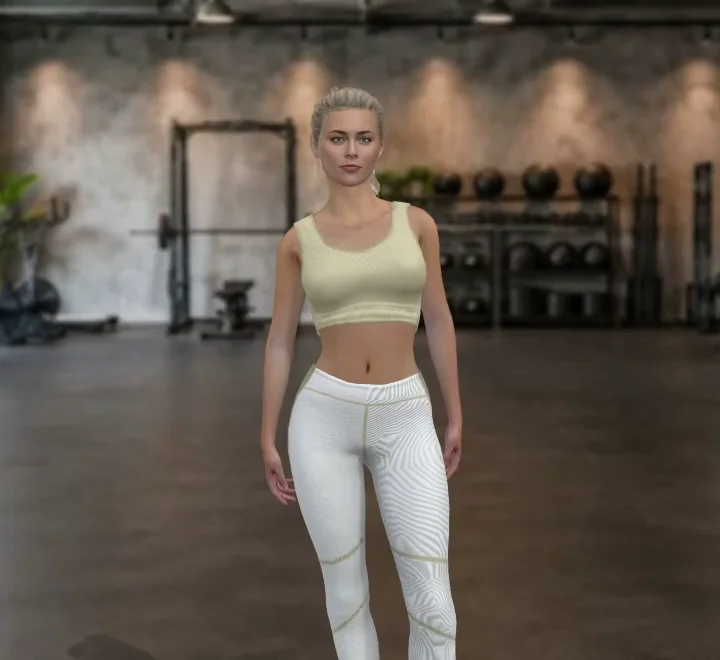
Set up your space.
Stand on a level, stable floor beside a solid wall. This guide uses the floor, not the edge of a step. Keep support within reach even though Franky’s animation does not show a wall.
Step-by-step technique
- Place your feet about hip-width apart and rest a hand on the wall.
- Stand tall and lift both heels gradually while keeping your toes and the front of your feet grounded.
- Pause briefly at a height you can control, without rolling onto the outer edges of your feet.
- Lower your heels slowly to the floor and settle before lifting again.
Begin with a small number of slow lifts. The height can be modest: aim for the same movement each time. Keep support available during a timed circuit and rest when your lowering becomes difficult to control.
Common mistakes to watch for
- Bouncing quickly so the heels drop heavily onto the floor.
- Rolling the ankles outward to find extra height.
- Removing support before you can keep your balance comfortably.
Make it easier.
Lift your heels only a little and keep both hands supported.
You can pause, shorten an interval, or leave this movement out of a routine. Use a version you can control rather than trying to match an animation’s speed.
Should I hold a wall for calf raises?
Yes, support can let you focus on moving your heels instead of on staying upright. Use a solid wall, not an object that might slide or tip. Keeping a hand supported is a sensible variation, not a failed repetition.
What should I change when they feel easy?
First compare the quality of your lifts and lowering. A brief controlled pause may be enough of a change for practice. Single-leg or loaded variations are different demands; do not remove support and add difficulty at the same time simply because a timer is still running.